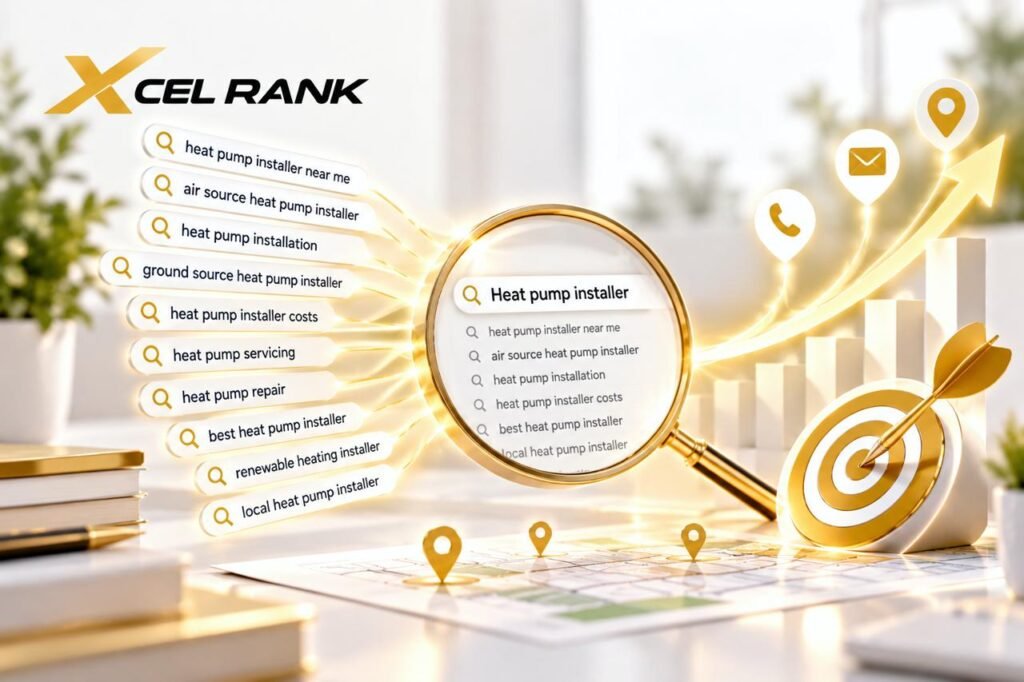

A heat pump installer’s website ranks when four things work together: a clear structure with dedicated service and location pages, fast pages that pass Core Web Vitals, schema markup, and content that answers what homeowners actually ask. If one of these is weak, it tends to hold back the rest.
This guide explains each one in plain terms and shows where AI search fits.
Is your website holding your rankings back?
Get a free local SEO audit from Xcel Rank.
Why Your Website Matters Beyond Google Business Profile
Your Google Business Profile can get you into the map pack, but your website is what Google checks to confirm the profile is accurate. It is also what ranks for broader searches like “heat pump installation cost” or “air source vs ground source heat pump”, which never appear in the map pack.
A profile with a thin website behind it hits a ceiling, because Google compares the two for consistency and depth.
Build a Site Structure With Dedicated Pages
Give each core topic its own page instead of squeezing everything onto the homepage. Google ranks focused pages more reliably than one long page covering everything.
Most installers need pages for air source installation, ground source installation, servicing, and each town they genuinely cover. Open each page by saying what it is about. An air source page should mention your accreditation, service areas, and process in the first few sentences.
Good structure also makes internal linking easy. Service pages link to location pages, and location pages link back to services and guides, which helps visitors and Google see how the site fits together.
A simple structure that works for most installers:
- Homepage: services, accreditations, and coverage area
- Service pages: one for each heat pump type you install
- Location pages: one for each town or region you really serve
- Guides and blog: grants, costs, and comparisons
- Case studies: real jobs with specific detail
Need service and location pages that rank?
We’ll review your site structure for free.
Page Speed and Core Web Vitals
Google measures real user experience with three Core Web Vitals. Largest Contentful Paint should be under 2.5 seconds, Interaction to Next Paint under 200 milliseconds, and Cumulative Layout Shift under 0.1.
Slow pages usually lose visitors and rankings, especially on mobile. On installer sites the usual causes are huge homepage images and video that loads first. Compressing images, loading the main image promptly, and keeping the site simple often fixes most problems without a rebuild.
Test your homepage and a key service page in Google’s PageSpeed Insights, then check them on a real phone. Google ranks mainly from the mobile version of your site, so mobile-first indexing makes that check essential.
What Is Schema Markup and Why Does It Matter?
Schema markup is structured code that tells Google and AI tools what your business is, what it does, and where it works, so they don’t have to guess from the page text.
Use LocalBusiness schema for your name, service areas, and accreditation. Add FAQPage schema to guide pages so individual questions can show up in search results. AI Overviews and chat tools tend to trust pages where the markup backs up the visible content. Most website platforms let you add schema with a plugin or template field, so you rarely need custom development.
| Requirement | What it solves | Priority |
|---|---|---|
| Service and location pages | Matches specific searches to specific pages | High |
| Core Web Vitals | Stops slow pages losing visitors and rankings | High |
| HTTPS and a working sitemap | Basic trust and crawlability | High |
| LocalBusiness and FAQPage schema | Helps Google and AI confirm your details | Medium |
Want pages that rank and convert?
Our Local SEO and AEO team builds service and location pages for heat pump installers.
Write Content That Answers the Question First
Answer each page’s main question in the first two or three sentences, then add detail. Featured snippets and AI Overviews both prefer short, self-contained answers.
A running costs page, for example, should state a real cost range near the top rather than opening with a general intro to renewable heating. Specific detail beats vague claims: your MCS number, the areas you truly cover, and honest limits such as property types that don’t suit a heat pump.
How Does AI Search Change Website SEO?
AI Overviews and AI assistants lean on pages that are technically clean and clearly structured, not just well written. Your structure and schema therefore affect whether you get cited as well as ranked.
One page that answers one question clearly, with matching schema, usually serves both goals. That is where local SEO and AEO overlap in practice.
Getting structure, speed, and schema right is ongoing work, not a one-off fix. A Local SEO and AEO partner like Xcel Rank can help you put that foundation in place and keep it healthy.
See where you stand today
A free audit shows exactly what to fix first.
Frequently Asked Questions
Does a heat pump installer need a separate page for each location?
Yes, for areas you regularly cover. A page with real local detail performs far better than one generic page aimed at every town.
How fast should a heat pump installer’s website load?
Aim for a Largest Contentful Paint under 2.5 seconds. Slower sites tend to lose rankings and visitors, especially on mobile.
Is schema markup worth it for a small installer?
Yes. LocalBusiness and FAQPage schema are quick to add and help Google and AI tools confirm your details.
Should the homepage try to rank for every keyword?
No. A focused homepage backed by service and location pages ranks more reliably.
Does website SEO replace a Google Business Profile?
No. The profile drives map pack visibility, while the website supports broader searches and proves the profile is accurate.
Ready to get more heat pump enquiries from Google?
Book a free audit with Xcel Rank and we’ll show you exactly what to prioritise first.
Book my free audit