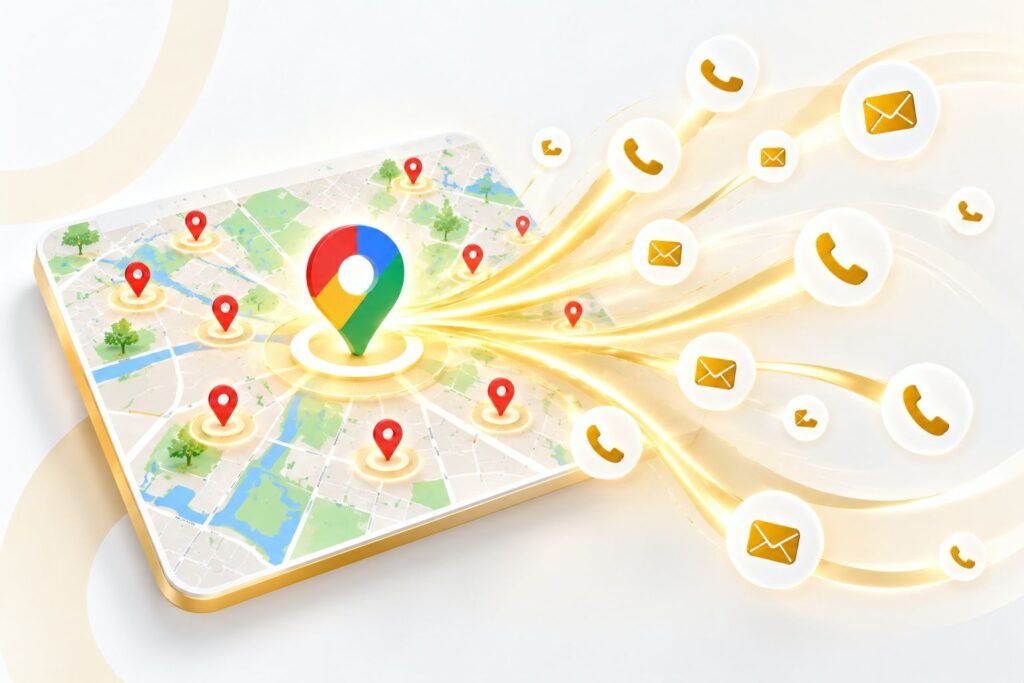
Google Maps and Google Search show local results in different ways. The Maps app favours the closest installer, while the Local Pack in Search favours the best-reviewed one. A heat pump installer can therefore rank well on one and poorly on the other.
This guide explains the difference, what improves your Maps position, and how it fits with your wider Google Business Profile work.
Do you show up on Google Maps?
Get a free local SEO audit from Xcel Rank.
Google Maps vs the Local Pack
Both use the same business data but weigh it differently. The Local Pack is the three-business block inside Google Search, where homeowners compare installers, so reviews and relevance count most.
The Maps app is used for quick lookups and directions by people who already know roughly what they want, so distance counts more. If you check your ranking on a phone browser, you are seeing the Local Pack. A customer opening the Maps app sees a separately calculated result. Mixing these up is a common reason installers feel their ranking doesn’t match what they were told.
What Decides Your Maps Ranking
Three factors apply, as in all local search: relevance, distance, and prominence. In Maps, distance has the most practical effect.
- Relevance: how well your category, business name, and listed services match the search
- Distance: how far the searcher is from your verified business address Biggest effect in Maps
- Prominence: your reviews, citations, and reputation
Because of this, your position can change street by street. You may rank first in the town where you are based and fall away near the edge of your service area, with exactly the same profile.
Practical Ways to Improve Your Maps Position
Start with the Google Business Profile basics in our optimisation guide, then focus on the signals that matter most inside Maps.
- Pick the closest primary category. A heating or renewable energy category fits better than a generic one. A poor match hurts more in Maps, where relevance has less room to make up for distance.
- Keep your address identical everywhere. Maps leans on proximity, so an old address on a single directory can make Google measure from the wrong place.
- Upload photos regularly. Finished air source installs, engineers on site, and a branded van help people recognise you quickly, which suits an app built for fast decisions.
- Ask for reviews that name the town and the job. A line like “fitted our air source heat pump in [town] and explained the Boiler Upgrade Scheme clearly” supports relevance and prominence together.
Is your profile set up for Maps?
We’ll check your category, address, and completeness for free.
Why Does Your Ranking Change Across Your Service Area?
Distance is measured again for every search, so your position shifts depending on where the homeowner is standing. Ranking third near your base and disappearing ten miles out is normal.
That is why one check from your own phone tells you very little. Geo-grid tools run searches from many points across your area and show where you are weak. For installers covering several towns, writing useful local content for each town helps relevance do more of the work where distance is against you. Pair it with real project photos and reviews from that area.
Want pages that rank and convert?
Our Local SEO and AEO team builds service and location pages for heat pump installers.
How AI Search Uses Maps Data
AI tools that answer questions like “best heat pump installer near me” draw on much of the same structured data Maps uses, including categories, reviews, and services.
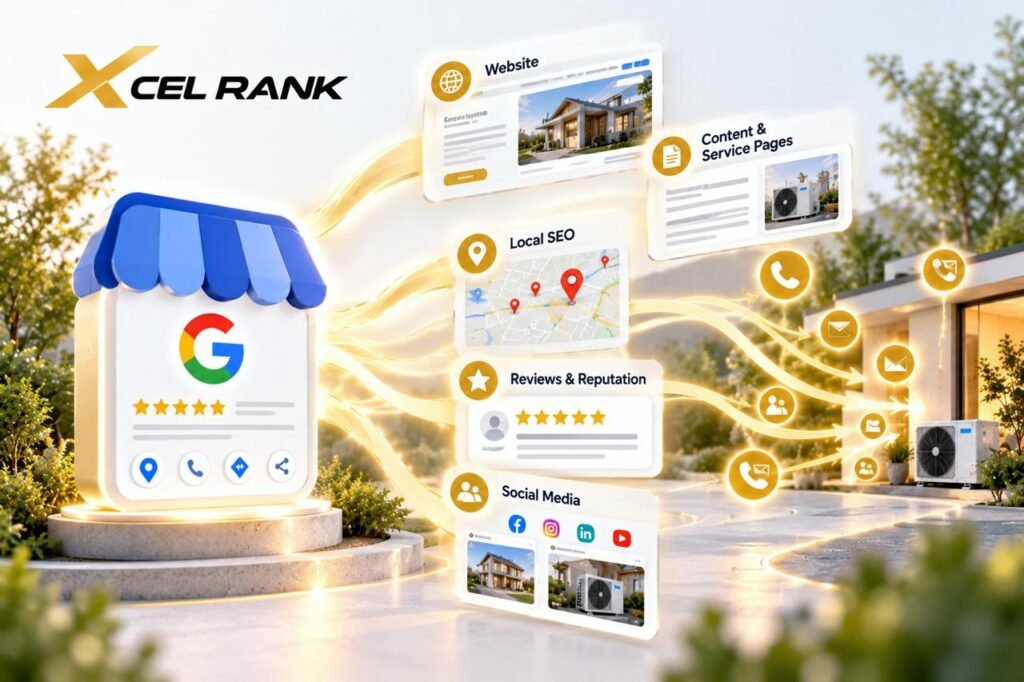
So the work that lifts your Maps ranking also helps AI tools recommend you. Keep your Google Business Profile, website, MCS details, and directory listings consistent, and both benefit without a separate plan.
Maps ranking comes down to the same profile and reputation basics as the rest of local SEO, with extra attention to distance. To see how you perform on both surfaces, book a free audit with Xcel Rank and we’ll show you what to prioritise first.
See where you stand today
A free audit shows exactly what to fix first.
Frequently Asked Questions
Why does my business rank differently in Google Maps than in normal Google search?
They are separate surfaces. Search shows the Local Pack, which leans on reputation, while the Maps app leans on distance.
Can a heat pump installer rank in Google Maps without a shopfront?
Yes, as long as the registered address behind the profile is accurate and verifiable, even if it is hidden as a service-area business.
Do more photos improve my Google Maps ranking?
Not directly. They build trust and engagement, so profiles with current photos tend to convert better once found.
How do I check my ranking across my whole service area?
One search from your phone shows a single point. Geo-grid tracking tools check many locations and give a fuller picture.
Does Google Maps ranking affect AI search visibility?
They are linked because both use similar business data, so improving one tends to support the other, though it isn’t guaranteed.
Ready to get more heat pump enquiries from Google?
Book a free audit with Xcel Rank and we’ll show you exactly what to prioritise first.
Book my free audit